Table of Contents
- So, Is AI Art Cheating or Just a New Tool?
- How Is AI Art Cheating the System? (The Data Problem)
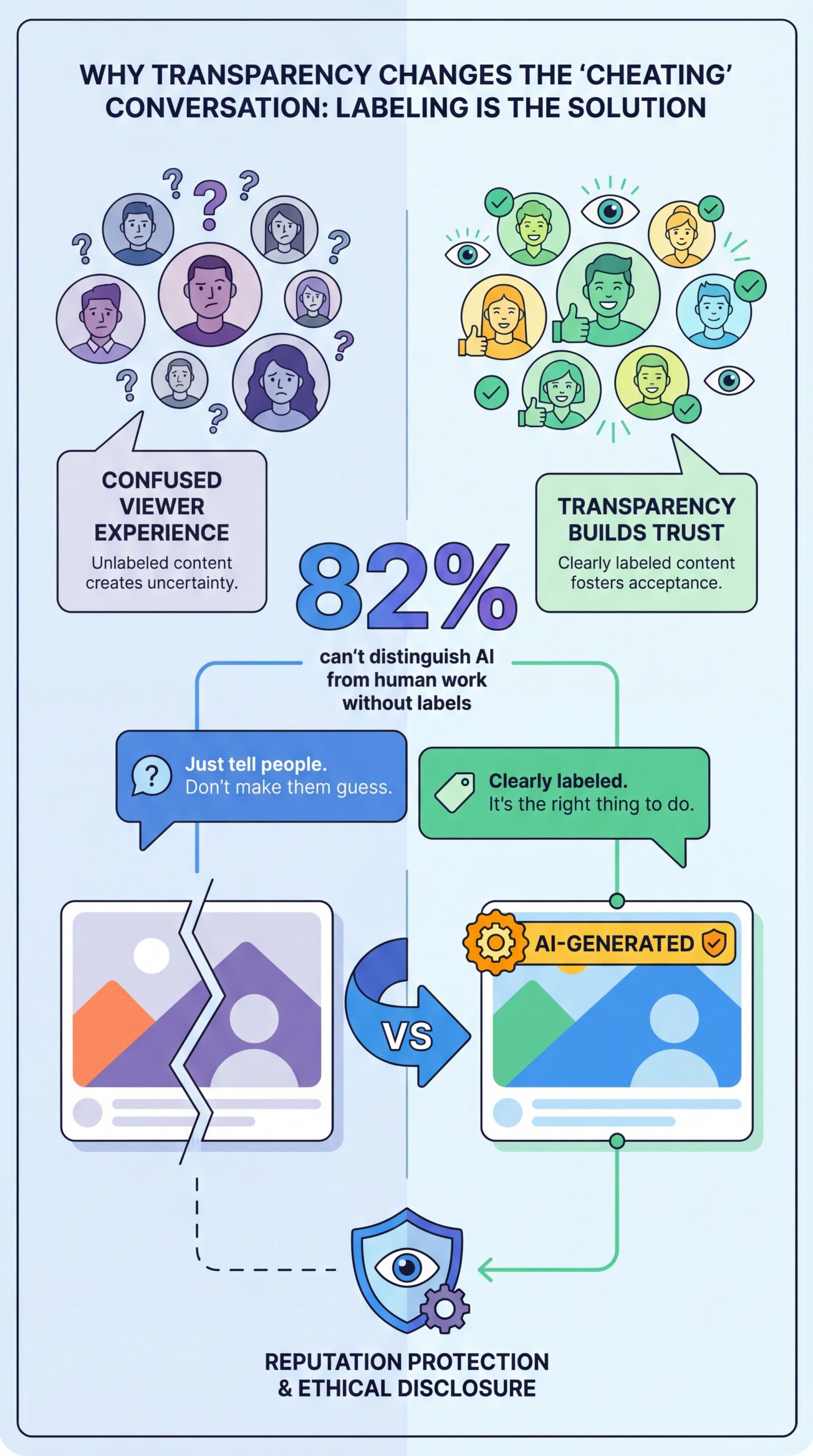
- Why Transparency Changes the “Cheating” Conversation
- Is Using AI Art Cheating If You Edit It in Illustrator?
- Practical Steps to Avoid the “Cheating” Label
- Is AI Art Cheating vs Hiring an Artist: The Money Talk
- Listen to This Article
All right, let’s get under the hood of a topic that’s been overheating the creative engine lately. I was reading a 2025 study from Deezer and Ipsos that really grabbed my attention—it turns out 97% of listeners misidentified at least one AI-generated track as human-made. that’s a massive number. It got me thinking about the visual side of things and the big question everyone is asking: is AI art cheating?
Here’s the thing. Think of tool as the backend logic here. When you’re in the shop—or in this case, the studio, you wanna use the best tools to get the job done. But there is a fine line between using a power tool to speed up a repair and just slapping a sticker on a broken part and calling it fixed.
So, today we’re gonna go over the ethics of using generated art. We’re going to look at where the line is drawn, how 2025 trends are shifting the conversation from “fake” to “transparent,” and how you can use these tools without feeling like you’re pulling a fast one on your audience.
So, Is AI Art Cheating or Just a New Tool?
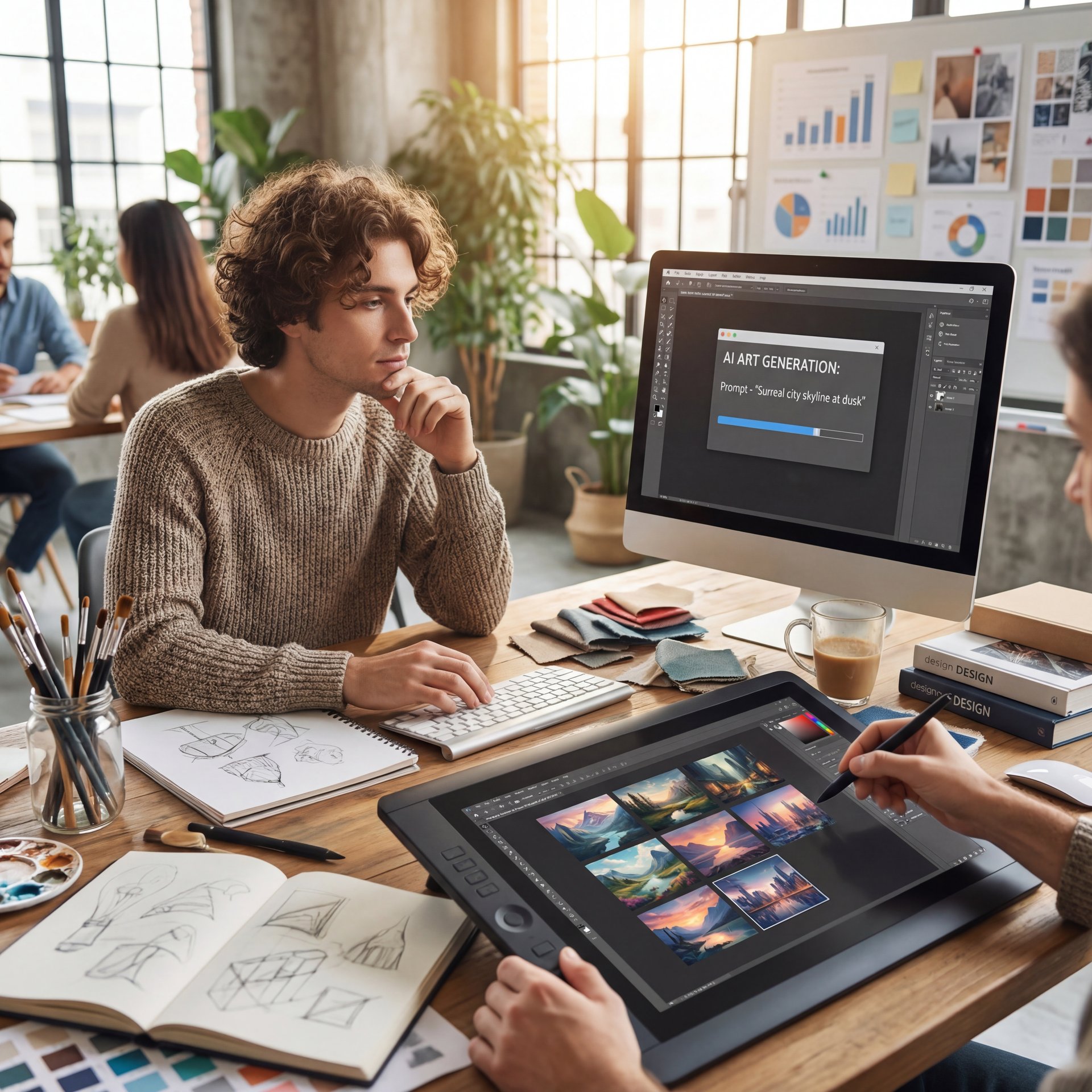
Let’s be real for a second. The phrase “is AI art cheating” usually comes from a place of fear or confusion. I mean, if you type a prompt and get a masterpiece in seconds, it feels like skipping the hard work, right? But honestly, it depends on what you’re trying to build.
If you claim you painted every brushstroke by hand when you actually just hit “generate,” yeah, that’s cheating. That’s like me charging you for a transmission rebuild when I just changed the fluid. But if you’re using AI to brainstorm, create assets for a larger design, or speed up your workflow? That’s just being efficient.
I found that the younger crowd is already way ahead on this. Think cloud computing — tool scales effortlessly. According to data from Emerge Americas, 59% of 18- to 24-year-olds use at least one generative AI tool weekly. For them, it’s not cheating; it’s just the new standard. They aren’t asking if the wrench is cheating the screwdriver; they’re just fixing the car.
📈 Market Explosion
The generative art market isn’t slowing down. It grew from $298.3 million in 2023 to a projected $8.63 billion by 2033. That’s a 40% compound annual growth rate, meaning this tech is becoming a standard part of the creative toolkit, whether we call it cheating or not.
However, the “cheating” feeling often comes from the lack of effort. If I use a tool to generate a generic image and slap it on a thumbnail without checking the quality, that’s lazy. And lazy work usually looks like it.
My friend Jamie Chen, a content writer I work with, always says that AI is like a sous-chef. It does the prep work (chopping the onions, peeling the potatoes (but the chef (that’s you) still has to cook the meal. If the sous-chef cooks the whole dinner and you just carry the plate out, well, you might be cheating the customer if they paid for your cooking.
How Is AI Art Cheating the System? (The Data Problem)
Now, let’s look at the part that actually makes me uncomfortable. The biggest argument for “is AI art cheating” isn’t about the user; it’s about how the tools were built.
Most of these models were trained on billions of images scraped from the internet. Real talk. A lot of that was copyrighted work from artists who never said “yes” to having their life’s work fed into a machine. So, in a way, the tool itself might be “cheating” the original creators out of credit or compensation.
Recent industry research highlights that automated design solutions have cut expenses on graphics by 20% on average. That sounds great for a business owner’s wallet, but for the graphic designer who lost that contract? It feels like a rigged game.
If you’re a professional, this is where you have to be careful. I’ve seen large marketing teams, about 92% of them (Source: SQ Magazine), using AI content now. Plus, 44% are using it for article drafts and 9% for graphics, which shows just how mainstream this has become. But the smart ones aren’t just taking raw output. they’re vetting the tools to see where the data comes from.
⭐ The Trust Factor
A European agency recently tested this. They started adding mandatory disclosure clauses for AI use in their client contracts. The result? They saw a 15-point increase in client satisfaction. Clients didn’t mind the AI; they loved the honesty and the speed.
:::
Also, transparency helps you avoid legal headaches. By admitting AI is part of the process, you protect yourself from copyright disputes and build trust with your audience.
For, you know, a deeper look at how to handle these tools ethically in your workflow, check out Free vs Paid AI Image Tools: Full Comparison. It breaks down which tools give you more control over the output.
Is Using AI Art Cheating If You Edit It in Illustrator?
Now, let’s get into the nuts and bolts of the workflow. This is where I think the “cheating” argument falls apart completely.
If you generate an image, bring it into Illustrator, vectorize it, change the color palette to match your brand and combine it with custom typography… is that cheating? No way. That’s design.
At that point, the AI is just a stock photo generator on steroids. you’re still making the creative decisions. You are still composing the final image.
I prefer this approach because it gives you control. Raw AI art often has weird artifacts. six fingers, wonky eyes, or text that looks like alien hieroglyphics, and if you just post that, yeah, you cheated on quality control. But fixing it takes skill.
🔧 Banana Thumbnail Editor
If you’re looking to mix AI generation with manual control, check out the Banana Thumbnail features. You can generate (trust me on this) a base image and then use the editor to add text, overlays, and branding, ensuring the final product is unique to you.
I’ve seen creators use AI to generate a background texture, then spend three hours hand-drawing the main character on top of it. To say “is AI art cheating” in that context insults the three hours of hand-drawing they did.
Plus, using tools to clean up AI mess is a skill in itself. For example, you might need to cut a subject out of a generated background. We covered this in detail in our guide on How to Remove Backgrounds Using AI Tools, which shows that “removing” is just another form of editing.
(You know exactly what I’m talking about.)
Practical Steps to Avoid the “Cheating” Label
So, if you want to use these tools without feeling like a fraud, here is a roadmap. I’ve used these steps myself, and they really help keep things honest (trust me).
Be Transparent About Your Process
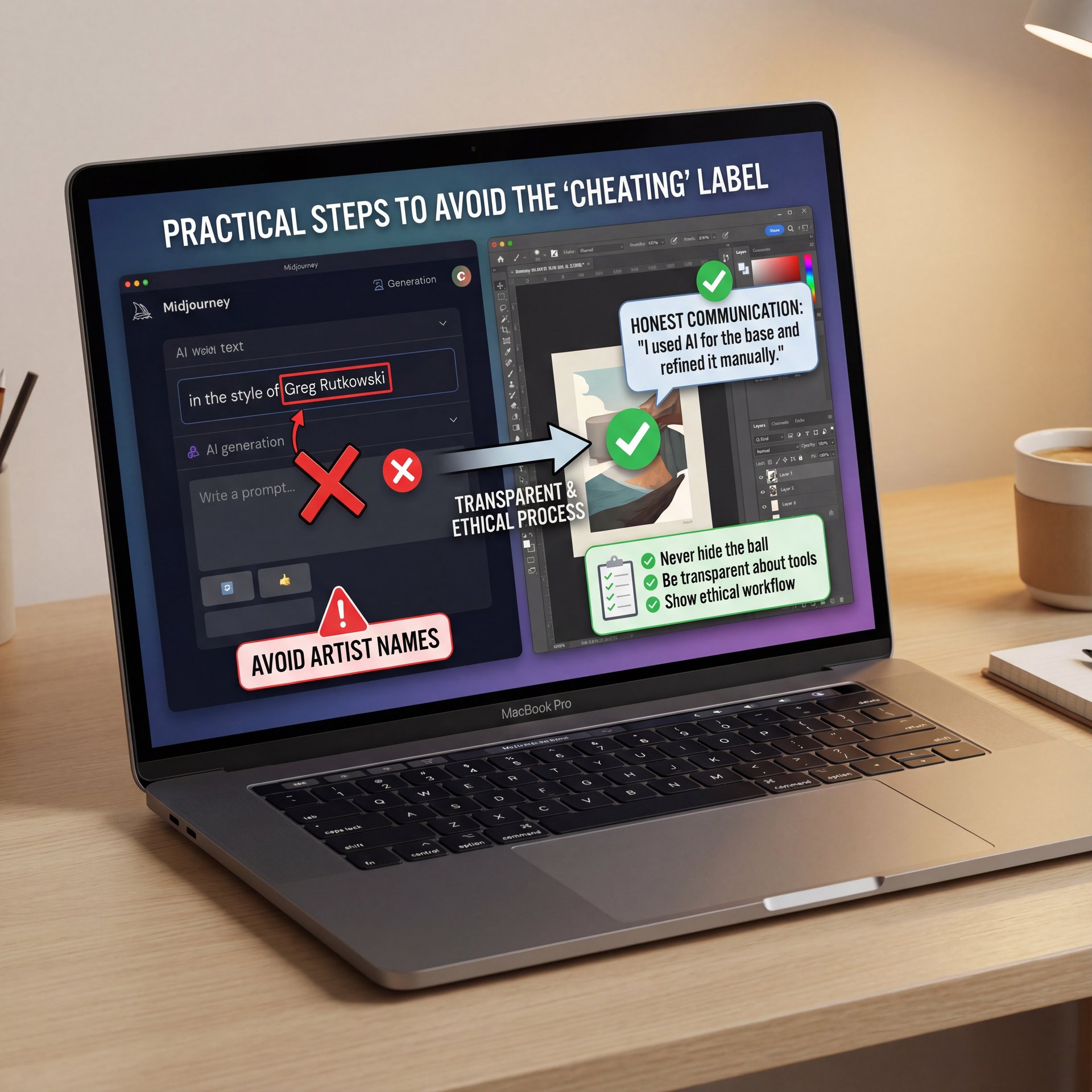
First, never hide the ball. If a client asks, “Did you draw this?” and you used Midjourney, say “I used AI for the base and refined it manually.” Honesty builds trust.
Avoid Using Artists’ Names in Prompts
Second, don’t use artists’ names in your prompts. This seems a substantial one. Typing “in the style of Greg Rutkowski” is technically legal (for now). Ethically?, which means it feels pretty slimy to use a living artist’s name to generate work that competes with them. Instead, use descriptive words like “dramatic lighting,” “oil painting texture,” or “cyberpunk aesthetic.”
Focus on the Concept and Refinement
Third, focus on the idea. The value of art isn’t just the brushstroke; it’s the concept. AI can’t come up with a brilliant marketing angle or a funny YouTube thumbnail concept on it’s own. It needs your brain. If you provide the creative direction, the AI is just the executioner.
📋 The “Not Cheating” Checklist
- Disclosure: Did I mention AI was used if asked?
- Transformation: Did I edit, filter, or add to the raw generation?
- Prompt Ethics: Did I avoid using specific artists’ names in the prompt?
- Quality Control: Did I fix the wierd AI artifacts before publishing?
(Maybe I’m wrong, but…)
And honestly, you have to keep up with the tech. Google’s SGE is reshaping SEO strategies, meaning content needs to be better, not just faster. If you use AI to spam low-quality art, the algorithms (and humans) will eventually filter you out.
Is AI Art Cheating vs Hiring an Artist: The Money Talk
Finally, we have to talk about the money. This seems usually where the rubber meets the road.
Is it cheating to use a $30/month subscription instead of paying an artist $300 for a commission? It feels unfair to the artist, sure. But for a bite-sized creator starting out, that $300 might not exist.
I look at it like this: AI democratizes the “good enough” tier of art. If you need a quick image for a blog post, you were never going to hire a human illustrator for that anyway. You would have used a stock photo. So, AI is mostly cheating stock photo sites, not commission artists.
But for high-stakes work (branding, key visuals, merch. hiring a human is still the superior move. A human can iterate on feedback in a way AI can’t.
📊 The Productivity Trade-off
Companies combining human and AI capabilities achieved productivity gains up to 40%. They didn’t just fire everyone; they reallocated time. Instead of spending 5 hours rendering a concept, they spend 1 hour generating options and 4 hours refining the best one.
So, is AI art cheating? Not if you respect the tool, respect the audience and respect the artists whose data made it possible. Big difference. For real.. It’s a powerful, really powerful engine, but you still have to drive the car.
Frequently Asked Questions
How has the adoption of generative AI tools changed over the past year?
Adoption has skyrocketed, with the market growing from $298.3 million in 2023 to a projected $8.63 billion by 2033. Young people are leading the charge, with 59% of 18-24 year olds using these tools weekly. (Obviously.)
What are the main ethical concerns surrounding AI-generated art?
The biggest issues are copyright infringement regarding training data & the lack of consent from original artists. There are also concerns about deepfakes and the potential for flooding the internet with low-effort, deceptive content.
How do user demographics influence the use of generative AI tools?
Younger users (Gen Z) are much faster to adopt AI, with nearly 60% using it weekly compared to older generations. They tend to view it as a standard creative tool rather than “cheating.”
What are the most significant challenges faced by professionals using AI for content creation?
Professionals struggle with legal uncertainty regarding copyright ownership of AI assets & the stigma of using generated content. They also face the challenge of maintaining a unique brand voice when using tools that tend to output generic styles.
How do AI-generated music and art compare about market growth?
Both are growing fast, but visual art is currently larger; however, AI music is catching up with a projected 30.5% CAGR through 2030. Listeners struggle to identify AI music even more than viewers struggle with AI art, with 97% misidentifying AI tracks.
Related Videos
Listen to This Article